
Forest Layers Explained: Canopy, Understory, Forest Floor, and Emergent Layer
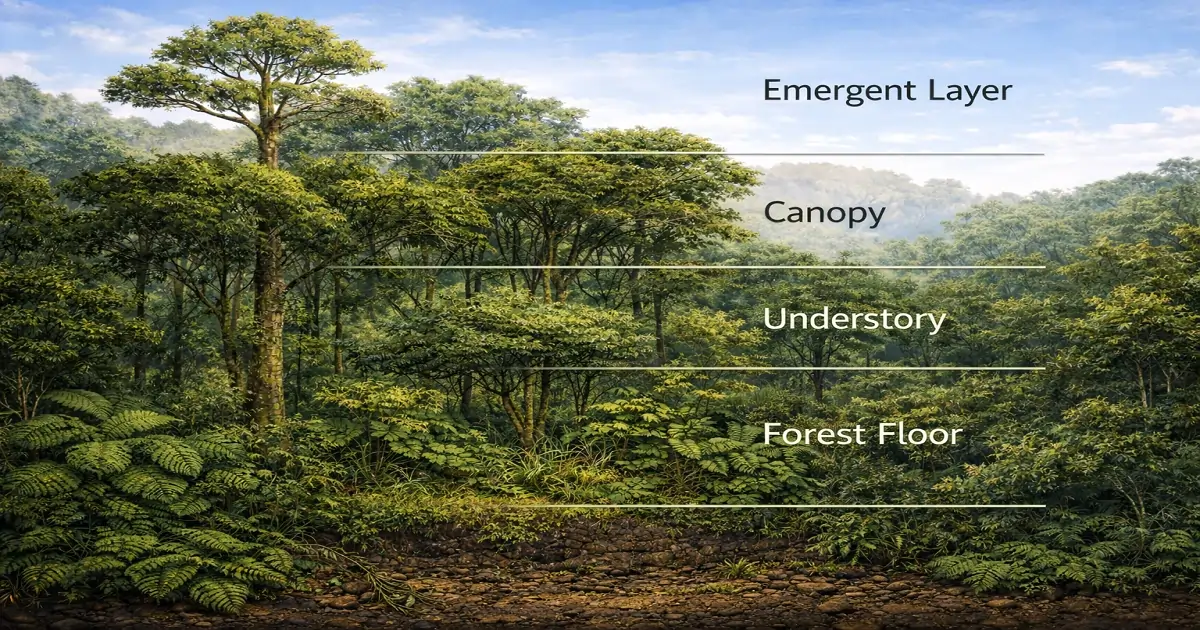
Forests are organized into vertical layers based on height, light, and vegetation. These layers form a natural structure that helps organize plant and animal life. In most forests, four main layers can be observed, each with unique conditions and living organisms.
At the top, tall trees receive direct sunlight. Below them, other layers receive less light and support different types of plants. Therefore, this layered forest structure creates distinct environments within the same area.
For example, some animals live high in the canopy, while others stay close to the ground. Each layer supports specific life forms. Understanding these layers of the forest helps explain how energy, light, and life are distributed within forest ecosystems.
What Are Forest Layers?
Forest layers are the vertical divisions of a forest based on height, light, and vegetation. They form a natural arrangement where plants and animals occupy different levels, often referred to as forest layers in ecological studies.
This pattern is known as vertical stratification in ecology. In a forest vertical structure, each layer receives a different amount of sunlight. As a result, different types of plants grow at each level. Tall trees dominate the upper layer, while smaller plants grow closer to the ground.
These vegetation layers also influence where animals live. Some species stay in the canopy, while others prefer shaded lower areas. Therefore, forest layers create distinct habitats within the same forest.
This structure helps distribute light, energy, and nutrients efficiently. It also supports biodiversity by allowing many species to coexist. Understanding forest layers gives a clear view of how forests are organized and how life is sustained within them.
How Many Layers Are in a Forest?
The number of forest layers can vary, but most forests are described using either three or four layers. This difference often depends on the type of forest being studied.
In many general forests, three main layers are recognized. These include the canopy, understory, and forest floor. These forest levels describe how vegetation is arranged from top to bottom.
However, in tropical rainforests, a fourth layer is often added. This topmost layer is called the emergent layer. It includes very tall trees that rise above the canopy and receive direct sunlight.
Therefore, the number of forest layers is not fixed. It depends on environmental conditions and forest type. Whether three or four layers are used, these vegetation levels help explain how forests are structured and how life is distributed within them.
The 4 Main Forest Layers
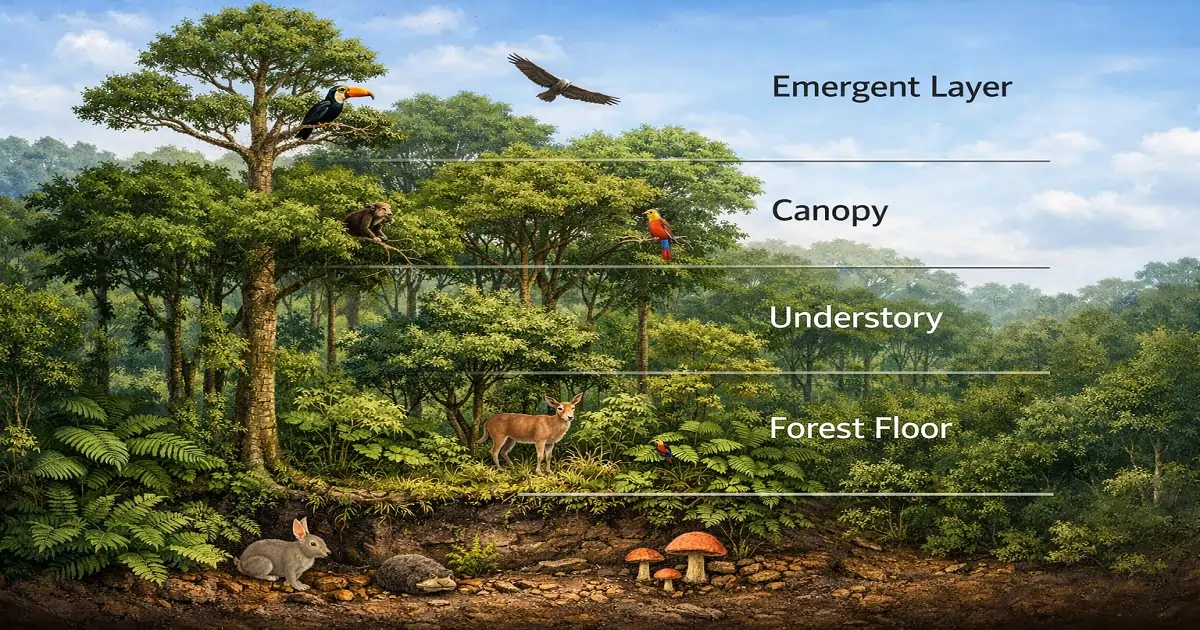
Forests are organized into four main layers based on height and light availability. These layers include the emergent layer, canopy, understory, and forest floor. Each level has different conditions, which influence plant growth and animal life.
As height increases, sunlight becomes stronger and wind exposure rises. In contrast, lower layers receive less light and remain more humid. Therefore, each layer supports different types of vegetation and organisms.
This vertical arrangement helps forests use space, light, and resources efficiently. It also allows many species to live together without direct competition. Understanding these layers gives a clear picture of how forest ecosystems function.
Emergent Layer
The emergent layer is the highest level of the forest. It includes the tallest forest trees that rise above all other layers. These trees can reach great heights and stand alone above the canopy.
In this uppermost layer, trees receive direct sunlight throughout the day. This allows them to grow quickly and produce large amounts of energy. However, they also face strong winds and harsh weather conditions.
Emergent trees are well adapted to these conditions. They often have thick trunks and strong roots to stay stable. Few animals live permanently at this height, but some birds and insects visit this layer.
Therefore, the emergent layer plays a key role in capturing sunlight and shaping the overall forest structure.
Canopy Layer
The canopy layer forms a dense cover of leaves and branches below the emergent trees. It is often called the forest roof because it spreads widely across the forest.
This layer receives a large amount of sunlight, although less than the emergent level. The dense vegetation creates a continuous cover that blocks light from reaching lower layers.
The canopy supports the highest biodiversity in the forest. Many animals, including birds, monkeys, and insects, live here. They find food, shelter, and protection within the thick canopy cover.
Besides supporting wildlife, the canopy also regulates temperature and moisture. Therefore, it plays an important role in maintaining forest stability.
Understory Layer
The understory layer lies below the canopy and receives limited sunlight. Light reaches this middle forest layer after passing through the dense canopy above.
As a result, only certain plants can grow here. These include shrubs, small trees, and low-light plants adapted to shaded conditions. Their leaves are often broad to capture available light.
The understory also provides habitat for many animals. Some species use this layer for shelter, while others move between layers. The environment here is usually humid and less windy.
Therefore, the understory supports shaded vegetation and helps connect upper and lower forest layers.
Forest Floor
The forest floor is the lowest layer of the forest. It receives very little sunlight because the upper layers block most of it. As a result, few plants grow directly on the ground.
This ground layer is covered with fallen leaves, dead plants, and organic matter. Decomposers such as fungi and bacteria break down this material. This process releases nutrients back into the soil.
This decomposition process shows how biotic and abiotic components work together. Living organisms break down organic matter, while soil and moisture support this process.
Therefore, the forest soil layer plays a vital role in nutrient cycling. It ensures that nutrients are reused and supports the growth of plants in higher layers.
Why Forest Layers Are Important
Forest layers play a key role in how ecosystems function and stay balanced. They support biodiversity by creating different habitats at each level. As a result, many species can live in the same forest without direct competition.
Each layer receives a different amount of light. This helps plants grow according to their needs and supports habitat diversity. Therefore, light distribution across layers improves resource use and reduces overcrowding.
These layers also maintain ecosystem stability. They regulate temperature, moisture, and nutrient flow within the forest. This organized system reflects the broader forest ecosystem structure where each part supports another.
Moreover, layered forests contribute to the importance of forests by supporting climate balance and life systems. Protecting these layers through sustainable practices helps maintain ecological balance and long-term stability.
How Sunlight Shapes Forest Layers
Sunlight is the main factor that shapes forest layers. It creates a gradient where light is strongest at the top and weakest at the bottom. This difference in sunlight distribution affects how plants grow at each level.
In upper layers, plants receive direct light and grow taller. In lower layers, light availability is limited, so plants adapt to low-light conditions. Therefore, each layer supports different types of vegetation.
This variation in light also influences energy flow in forests. Plants capture sunlight and convert it into food, which then supports other organisms. This process connects directly with the forest food chain structure.
Thus, sunlight controls plant growth, energy movement, and the overall structure of forest ecosystems.
Forest Layers in Different Types of Forests
Forest layers vary depending on the type of forest and its climate. In tropical forests, layers are clearly defined because of high rainfall and constant sunlight. These layered forest systems often include four distinct levels, each supporting rich biodiversity.
In contrast, temperate forests show less defined layering. Seasonal changes and lower sunlight create simpler vegetation structure differences. As a result, these forests often have fewer distinct layers compared to tropical regions.
For example, dense layering in tropical regions is linked to tropical forest. Meanwhile, seasonal variation influences temperate forest features.
Therefore, forest type variation plays a key role in shaping how layers form and function across different ecosystems.
Common Questions About Forest Layers
Forest layers often raise simple but important questions about how forests are structured. The answers below clarify key concepts in a clear and direct way.
What are the 4 layers of a forest?
The four main forest layers are the emergent layer, canopy, understory, and forest floor, arranged from top to bottom. Each layer differs in height, light availability, and types of plants and animals. Together, these forest layer names describe how life is organized vertically.
How many layers are in the forest?
Most forests are described using three or four layers. General forests often have three layers, while tropical forests include a fourth emergent layer. Therefore, the number of vegetation levels depends on forest type and environmental conditions.
What is the lowest forest layer?
The lowest forest layer is the forest floor. It receives very little sunlight and is covered with decomposing organic matter. This layer plays a key role in nutrient cycling and supports soil formation.
Which layer has the most animals?
The canopy layer has the most animals in a forest. It provides food, shelter, and protection through dense vegetation. Many species live in this layer, making it the most active zone among forest zones.
Conclusion
Forest layers show how a forest is organized from top to bottom. Each layer, from the emergent level to the forest floor, supports different plants and animals. Together, they create a balanced system where life can grow and adapt.
These layers also control how sunlight, energy, and nutrients move through the forest. As a result, they help maintain ecological balance and support biodiversity. Every layer has a role, even the darkest parts near the ground.
However, changes in one layer can affect the entire system. Therefore, protecting forest layers is important for long-term stability. Healthy layers ensure that forests continue to support life and maintain environmental balance over time.
This makes forest layers essential for sustaining life and maintaining long-term ecosystem balance.