
Temperate Forest: Climate, Characteristics, Vegetation and Examples
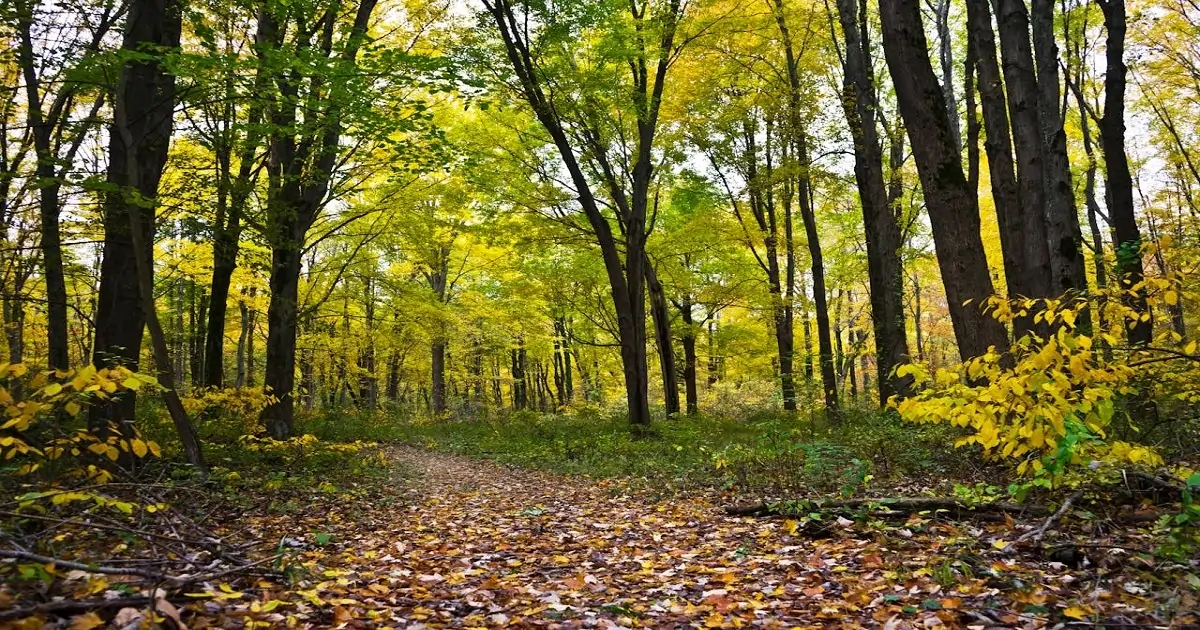
Temperate forest refers to a biome found in regions with a moderate climate and clear seasonal changes. These forests occur mainly in mid-latitude areas, where summers are warm and winters are cool. Rainfall is usually well distributed, which supports dense plant growth.
The temperate forest biome includes a mix of deciduous and evergreen trees. Therefore, it shows visible seasonal patterns such as leaf fall and regrowth. These seasonal forests support diverse plant and animal life and help maintain ecological balance.
Climate conditions, vegetation types, and animal adaptations shape these balanced climate forests. Their distribution across different continents also shows how ecosystems respond to seasonal variation in mid-latitude forests
What is a Temperate Forest?
A temperate forest is a type of forest biome found in regions with moderate temperatures and clear seasonal changes. It forms an important part of the temperate biome, where climate conditions support steady plant growth.
These forests usually grow between tropical and boreal regions. They are located mainly in mid-latitude areas across both hemispheres.
Most temperate forests lie in the mid-latitudes, roughly between 30° and 50° in both hemispheres. You can find them in parts of North America, Europe, and East Asia. These areas receive enough rainfall, which helps trees grow tall and dense.
Within the forest biome classification, temperate forests sit between warm tropical forests and cold boreal forests. Therefore, they show a balance of both warmth and cold. This position also shapes their plant and animal life.
These forests play a key role in global forest distribution. They store carbon, support wildlife, and protect soil. Their layered structure reflects the forest ecosystem structure, where different components work together.
Key Characteristics of Temperate Forests
Temperate forests show clear features that make them different from other forest types. These traits develop due to climate, soil, and seasonal cycles. As a result, they maintain a stable ecological balance.
Seasonal Variation
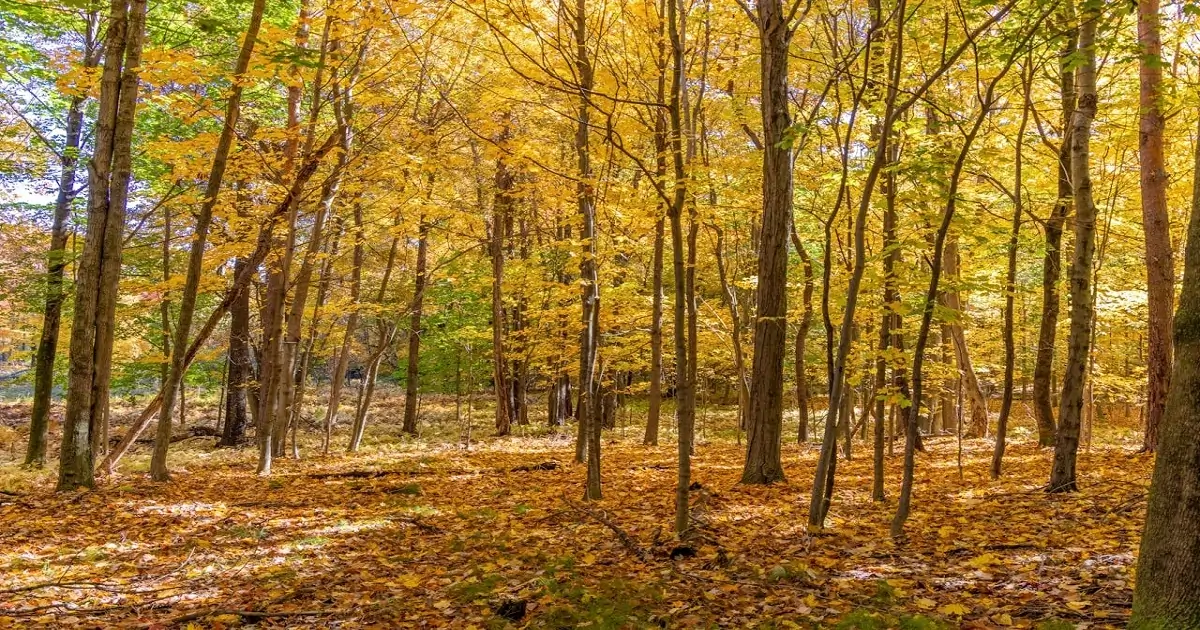
Temperate forests experience four distinct seasons: spring, summer, autumn, and winter. Each season brings visible changes in the environment. For example, trees grow new leaves in spring and shed them in autumn.
These seasonal cycles affect plant growth and animal behavior. Many animals adapt by migrating or hibernating during winter. Therefore, life in these forests follows a natural yearly rhythm.
Moderate Climate Conditions
The climate in temperate forests remains moderate throughout the year. Summers are warm, while winters are cool but not extreme. Rainfall occurs regularly, which supports continuous plant growth.
This balance of temperature and precipitation creates suitable living conditions. Besides, it helps maintain healthy ecosystems without harsh stress on plants and animals.
Soil and Biodiversity Traits
Temperate forests have fertile soil rich in organic matter. Fallen leaves decompose and add nutrients back into the ground. This process improves forest soil fertility over time.
Biodiversity in these forests is moderate but stable. You can find a variety of trees, shrubs, birds, and mammals. These biodiversity patterns support strong ecological connections within the forest.
Climate of Temperate Forests
Climate plays a central role in shaping temperate forests. It remains moderate, yet it changes clearly across the year. These forests lie in stable climate zones, so extreme conditions are rare.
However, seasonal climate variation strongly influences life cycles. This balance of temperature and rainfall shapes how these ecosystems function, as seen in temperate forest climate patterns.
Temperature Range
Temperatures in temperate forests vary between warm summers and cool winters. Summer temperatures often range from 20°C to 30°C. In contrast, winter temperatures can drop close to freezing.
These temperature fluctuations help control plant growth and animal activity. Therefore, organisms adjust their behavior based on seasonal shifts. This balance supports long-term ecosystem stability.
Rainfall Patterns
Temperate forests receive moderate rainfall throughout the year. Annual precipitation usually ranges between 75 and 150 centimeters. Rain falls evenly, although some regions also receive snowfall in winter.
These precipitation cycles maintain soil moisture and support dense vegetation. Besides, consistent rainfall helps trees grow tall and healthy. Water availability also shapes biodiversity patterns.
Four Seasons Explained
These forests show four clear seasons: spring, summer, autumn, and winter. Each season brings noticeable environmental changes.
In spring, new leaves and flowers appear as temperatures rise. Summer supports rapid plant growth and active animal life. During autumn, trees shed leaves, preparing for colder months. Winter slows down biological activity due to low temperatures.
These seasonal changes affect both plants and animals. For example, some animals hibernate, while others migrate. Therefore, the temperate forest climate creates a predictable yearly cycle for survival.
Vegetation in Temperate Forests
Vegetation in temperate forests shows a mix of plant types adapted to seasonal changes. These forests support dense plant cover due to fertile soil and regular rainfall. As a result, plant life remains diverse and stable.
Deciduous Trees
Deciduous trees form a major part of temperate forest vegetation. These trees shed their leaves during autumn to reduce water loss. This adaptation helps them survive cold winter conditions.
Common examples include oak, maple, and birch trees. In spring, they grow fresh leaves, which support photosynthesis. Therefore, deciduous vegetation follows a clear seasonal cycle.
Evergreen Trees
Evergreen trees also grow in many temperate forests, especially in cooler regions. These include coniferous trees such as pine, fir, and spruce. Their needle-like leaves reduce water loss and resist cold.
Unlike deciduous trees, they retain leaves throughout the year. This allows continuous photosynthesis, even in winter. Besides, these trees add variety to forest vegetation.
Forest Structure and Plant Adaptations
Temperate forests show a layered plant structure, where different plants grow at different heights. Tall trees form the canopy, while smaller plants grow below. This structure allows plants to share sunlight and space.
Plants adapt in many ways to survive seasonal changes. For example, some grow quickly in spring, while others store energy for winter. These adaptations support balance within the forest layers and help maintain ecosystem stability.
Animals of Temperate Forests
Temperate forests support a wide range of animals due to stable climate and rich vegetation. These forests provide food, shelter, and space for many species. Therefore, forest wildlife remains active and diverse.
Common Animal Types
Different types of animals live in temperate forests, including herbivores, carnivores, and omnivores. Herbivores such as deer and rabbits feed on plants. Carnivores like foxes and wolves hunt other animals.
Omnivores, such as bears, eat both plants and animals. This variety supports balanced ecosystem interactions. Each group plays a role in maintaining ecological stability.
Seasonal Behavior
Animals in temperate forests show clear seasonal adaptation. Some animals hibernate during winter to conserve energy. Others migrate to warmer regions when food becomes scarce.
These behaviors help animals survive changing conditions. Energy flow within the ecosystem depends on these patterns, especially through the forest food chains. Therefore, seasonal changes shape how animals live and interact.
Types of Temperate Forests
Temperate forests can be grouped based on dominant tree types and climate conditions. This forest classification helps explain how vegetation changes across regions. As a result, different biome types show unique features within similar climate zones.
Temperate Deciduous Forest
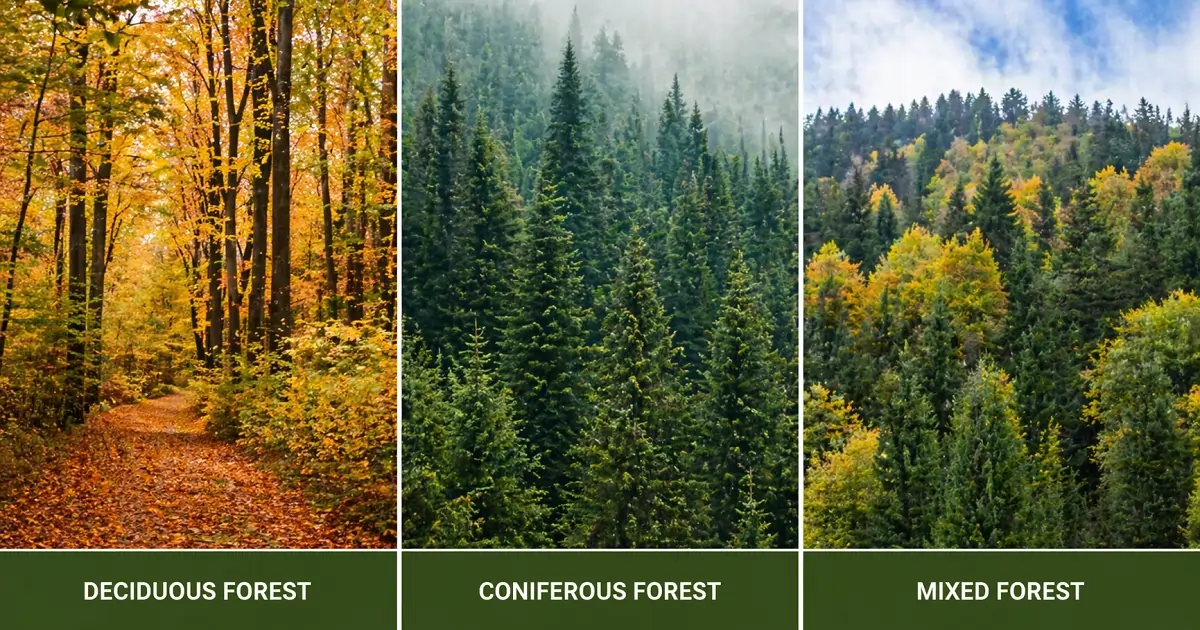
Temperate deciduous forests contain trees that shed leaves each year. These forests grow in regions with clear seasonal variation. Trees like oak, maple, and beech are common here.
Leaf shedding helps reduce water loss during cold months. Therefore, these forests show strong seasonal changes in appearance. They differ from tropical forests, where trees remain green throughout the year.
Temperate Coniferous Forest
Temperate coniferous forests mainly consist of evergreen trees such as pine, fir, and spruce. These trees have needle-like leaves that reduce water loss. This feature helps them survive cooler and drier conditions.
These forests often grow in regions with slightly colder climates. Compared to the boreal forest (taiga), they experience milder winters. Therefore, they support a wider range of plant and animal life.
Mixed Forest
Mixed forests contain both deciduous and evergreen trees. This combination creates diverse vegetation zones within the same area. As a result, these forests support varied wildlife and stable ecosystems.
They usually develop in regions where climate conditions allow both tree types to grow. Besides, mixed forests act as a transition between different forest types. This makes them important in understanding global forest distribution.
Temperate Forests in India
Temperate forests in India occur mainly in mountainous regions where altitude influences climate. These forests form an important part of Indian forest distribution. They support unique plant and animal species adapted to cooler environments.
Himalayan Temperate Forests
Himalayan forests represent the largest temperate forest region in India. They grow at altitudes between 1,500 and 3,000 meters. Climate conditions here remain cool with moderate rainfall.
These forests include oak, pine, and rhododendron trees. Seasonal changes are clearly visible, especially during autumn and winter. Therefore, Himalayan forests support diverse wildlife and rich biodiversity.
Western Ghats (Montane Temperate Zones)
In the Western Ghats, temperate forests appear in higher altitude zones. These areas are often called montane ecosystems due to their elevation. Climate remains cooler compared to nearby lowlands.
Vegetation includes evergreen trees, shrubs, and grasslands adapted to moist conditions. Altitude-based distribution plays a key role in shaping these forests. Besides, these regions support many endemic species found nowhere else.
Examples of Temperate Forests Around the World
Temperate forests occur across several continents, mainly in mid-latitude regions. Their global forest distribution depends on climate, rainfall, and geography. Therefore, each region shows slight variations in vegetation and wildlife, similar to patterns seen in temperate broadleaf and mixed forests.
In North America, temperate forests cover large areas of the eastern United States and parts of Canada. These forests mainly include deciduous trees and support diverse animal species.
In Europe, temperate forests stretch across countries such as Germany, France, and the United Kingdom. Human activity has influenced these forests, yet many natural areas remain protected.
East Asia also contains extensive temperate forests, especially in China, Japan, and Korea. These forests show rich biodiversity due to varied climate conditions. As a result, this region remains an important part of global forest geography.
Importance of Temperate Forests
Temperate forests play a vital role in maintaining environmental balance. Their ecological importance extends beyond local regions to global systems. Therefore, they support both nature and human life in many ways. These roles are also reflected in global forest insights from forest resources and ecosystem roles.
One major function is carbon storage. These forests absorb carbon dioxide and store it in trees and soil. This process, known as carbon sequestration, helps reduce climate change effects. Besides, it keeps the atmosphere more stable.
Temperate forests also support a wide range of plant and animal species. Their layered structure provides shelter, food, and breeding spaces. As a result, biodiversity remains stable and well connected. This highlights the broader importance of forests in sustaining life.
They also help regulate climate by controlling temperature and moisture levels. Forest cover reduces heat and maintains rainfall patterns. However, human activities threaten these benefits. Effective forest conservation methods can protect these ecosystems. Limiting damage from deforestation impacts is equally important for long-term sustainability.
Conclusion
Temperate forests show a clear link between climate, vegetation, and ecosystem balance. Their moderate climate supports diverse plant life, including deciduous and evergreen trees. These forests also provide stable conditions for many animal species.
Seasonal changes shape how plants grow and how animals survive. Therefore, these ecosystems follow a natural yearly cycle. Their role in carbon storage and climate control makes them highly valuable.
Maintaining these forests is essential for environmental stability. They support biodiversity and protect natural resources. As global conditions change, their role becomes even more important for future ecological balance.