
Boreal Forest (Taiga): Climate, Location, Characteristics and Importance
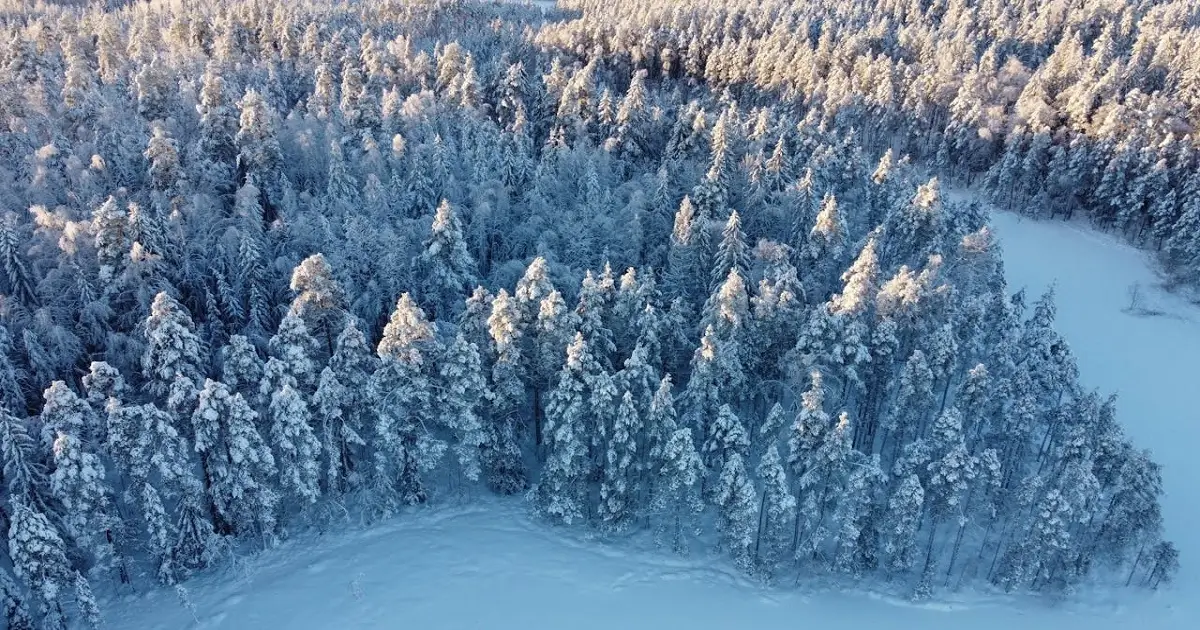
The boreal forest, also known as the taiga, is a vast subarctic forest found across the northern parts of the world. It stretches across Canada, Russia, Scandinavia, and Alaska, forming one of the largest forest ecosystems on Earth. These forests are dominated by coniferous trees such as spruce, pine, and fir.
The climate is cold, with long winters and short summers. Snow covers the land for much of the year, influencing vegetation, soil, and wildlife. This results in distinctive features such as evergreen forests, acidic soils, and species adapted to seasonal extremes.
This forest also plays an important role in climate regulation, wildlife support, and global carbon storage.
What is a Boreal Forest (Taiga)?
The boreal forest, also known as the taiga, is a large biome found in cold northern regions. The term “taiga” originates from a Russian word meaning forest land, referring to extensive areas of woodland dominated by evergreen trees.
This biome consists mainly of coniferous forests, where species like spruce, pine, and fir grow densely. Their needle-shaped leaves help reduce water loss and withstand freezing conditions, allowing the forest to remain green throughout the year.
It forms a broad ecological belt across the northern hemisphere and acts as a transition zone between tundra in the north and temperate forests in the south. Because of its scale and environmental role, it is considered one of the major terrestrial biomes, alongside other systems within forest ecosystem types.
Where is the Boreal Forest Located?
The taiga forms a major part of the Earth’s northern landscapes as a subarctic forest system. It develops in regions where cold conditions shape vegetation and ecosystem patterns. These areas support dense coniferous forests adapted to low temperatures.
This biome appears in a broad zone below the Arctic, where environmental conditions remain similar across continents. As a result, region creates a distinct ecological belt with consistent features.
To understand its full extent, it is useful to look at how this forest is distributed globally and how it appears in different regions.
Global Distribution
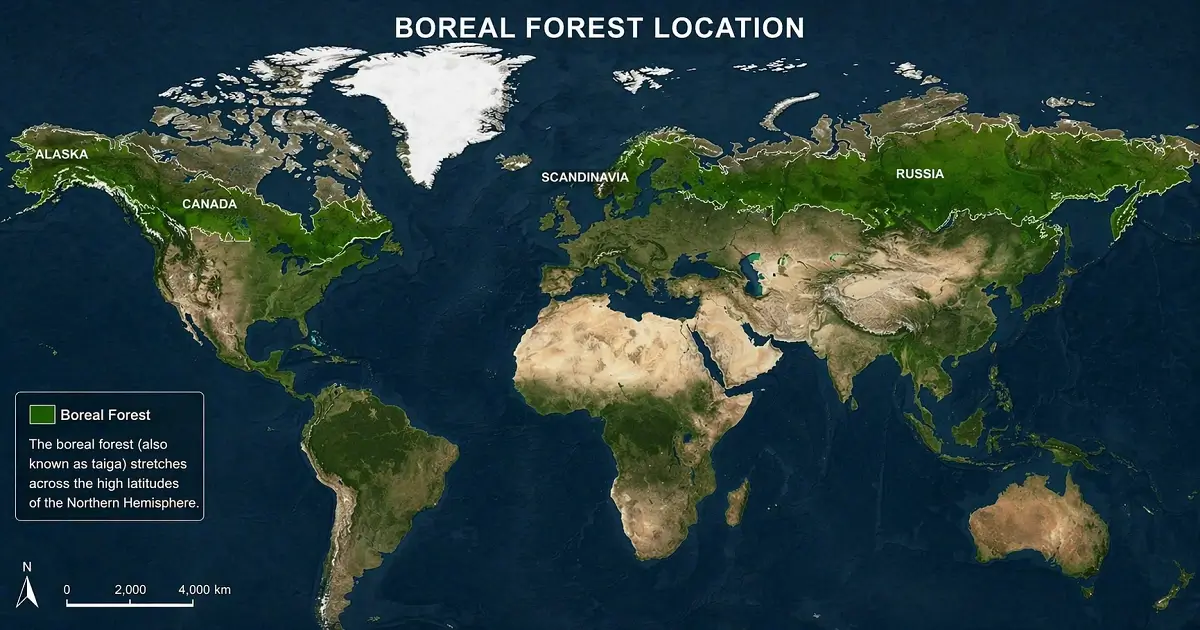
The boreal region spreads across the northern hemisphere in a wide, continuous belt. It covers large parts of Canada, which holds one of the biggest portions of this biome. Russia also contains vast boreal regions, especially across Siberia.
In addition, the taiga extends into Scandinavian countries such as Norway, Sweden, and Finland. These areas have similar cold conditions that support coniferous forests. Alaska in the United States also forms part of this northern forest system.
Together, these regions create a nearly unbroken stretch of northern coniferous forest around the globe. Therefore, this region is often seen as a key example of global distribution in natural ecosystems.
Boreal Forest in Different Regions
This forest exists in parts of the United States, mainly in Alaska. In Europe, it spreads across northern countries with cold climates. Canada, however, has the largest and most continuous boreal area.
India does not have a true boreal forest. This is because the climate in India does not match the cold, subarctic conditions needed for taiga growth. Instead, India has tropical and subtropical forests.
Overall, the boreal forest represents a classic example of a subarctic climate, making it a defining feature of a subarctic forest ecosystem where life survives through seasonal extremes.
Climate of the Boreal Forest
This biome has a cold climate that shapes this subarctic forest ecosystem. Winters are long and severe, often lasting six to eight months, with temperatures dropping well below freezing, a pattern consistent with boreal forest climate patterns.
Snowfall is common and remains on the ground for extended periods. While this snow layer protects plant roots, it also limits the growing season. Summers are short but moderately warm, allowing brief periods of plant growth and animal activity.
Seasonal variation is significant, with large differences between winter and summer temperatures typical of subarctic regions. As a result, species in this biome are adapted to survive extreme seasonal conditions.
Key Characteristics of the Boreal Forest
The boreal biome shows distinct ecological traits shaped by cold climates and long winters. These conditions influence vegetation, soil, and biodiversity. As a result, the biome develops a simple but well-adapted structure. It supports life forms that can survive extreme seasonal changes.
Compared to other forest types, the taiga has lower species diversity. However, it still plays an important ecological role. Its vegetation remains active throughout the year, even in harsh weather. Therefore, this forest maintains stability despite limited resources.
These features make this biome unique among global ecosystems. Its forest structure is less layered but still functional. In many areas, it includes basic layers such as canopy and forest floor, reflecting patterns seen in forest layers.
Vegetation and Plant Adaptations
This biome is often described as a northern coniferous forest, dominated by species such as spruce, pine, and fir. These trees have needle-shaped leaves that reduce water loss. This feature helps them survive cold and dry conditions.
Most trees in this region are evergreen. They do not shed leaves during winter. Instead, they stay green and continue basic functions throughout the year. This allows them to take advantage of the short growing season.
Their cone shape also helps snow slide off easily. As a result, branches do not break under heavy snowfall. These adaptations make coniferous vegetation well suited for the boreal environment.
Soil and Biodiversity
The soil in the taiga is usually acidic and low in nutrients. Cold temperatures slow down decomposition. Therefore, organic matter builds up slowly over time.
Because of this, plant diversity remains limited. Only species adapted to poor soil conditions can survive. However, these species are highly specialized and efficient.
Animal and plant life in this region show strong adaptation to the environment. Even with low biodiversity, the ecosystem remains balanced. This stability highlights the importance of adaptation in cold biomes.
Plants and Animals of the Boreal Forest
The taiga supports a range of plants and animals that can survive cold conditions. Life here depends on adaptation and seasonal changes. Therefore, species develop traits that help them endure long winters and short summers.
This biome may not have high diversity, but it includes many well-adapted species. These organisms form stable relationships within the ecosystem. As a result, energy flow and survival remain balanced throughout the year.
Common Plants
The boreal forest is mainly covered with coniferous vegetation typical of northern coniferous forests. Common trees include spruce, fir, and pine. These trees grow closely together and form dense forests.
Their needle-like leaves reduce water loss and resist freezing. In addition, their evergreen nature allows continuous photosynthesis when conditions are suitable. Mosses and lichens also grow on the forest floor.
These plants play a key role in supporting the ecosystem. They provide food and shelter for animals and help maintain soil stability.
Common Animals
The boreal forest is home to animals such as moose, lynx, wolves, and bears. These species have thick fur or fat layers to survive cold winters. Some animals also change behavior with seasons.
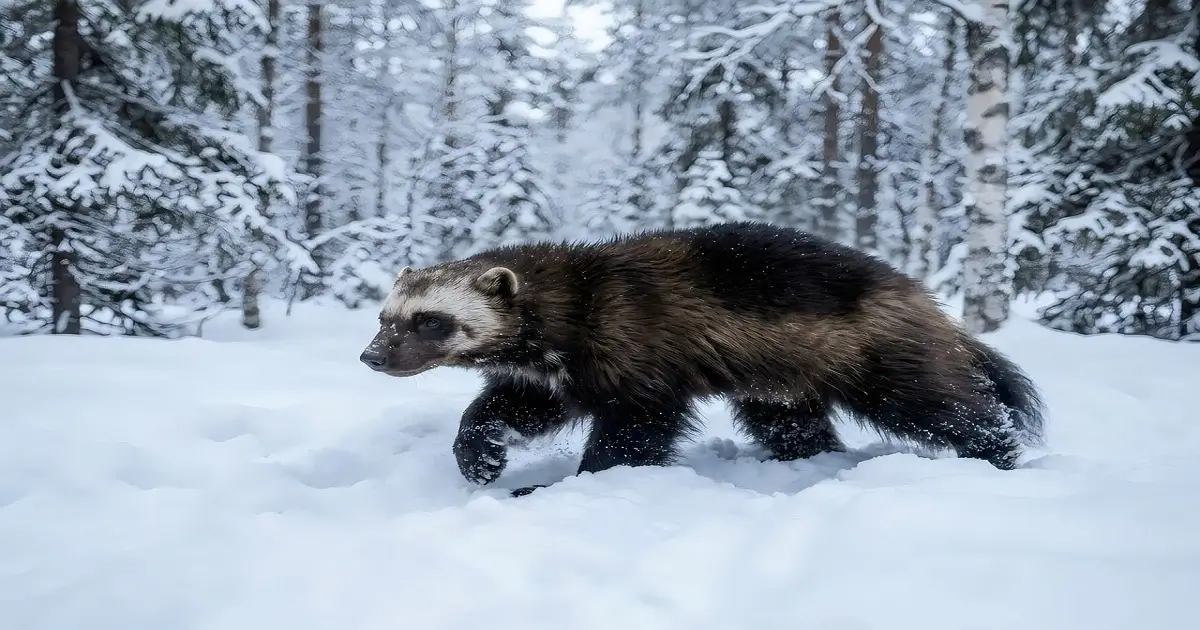
For example, bears hibernate during winter, while others migrate to warmer regions. Predators and herbivores depend on each other for survival. This creates a balanced ecosystem.
These interactions show how energy moves through the ecosystem. Such relationships are part of energy flow and food relationships.
Importance of the Boreal Forest
The boreal forest plays a vital role in maintaining global environmental balance. It supports climate regulation, biodiversity, and human livelihoods. Despite its simple structure, it has a large ecological impact.
This forest stores vast amounts of carbon and helps control climate patterns. It also provides habitat for wildlife and supports local communities. Therefore, its importance goes beyond regional boundaries.
Role in Climate Regulation
The boreal forest acts as a major carbon sink. It stores carbon in trees, soil, and organic matter. This helps reduce the amount of carbon dioxide in the atmosphere.
As a result, it plays a key role in regulating global climate. It also influences temperature and weather patterns in nearby regions. These functions are part of the broader role of forests in climate stability.
Its importance in storing carbon and regulating climate is also reflected in the global significance of boreal forests, where these ecosystems are recognized for their role in maintaining environmental balance and supporting large-scale ecological processes.
Ecological and Human Importance
The boreal forest provides habitat for many plant and animal species. It supports biodiversity, even with limited species variety. In addition, it is home to indigenous communities who depend on forest resources.
These communities rely on the forest for food, shelter, and cultural practices. The forest also provides resources such as timber and natural products.
Sustainable use of these resources is essential. This is supported through sustainable management practices, which help protect the ecosystem for future generations.
How Boreal Forest Differs from Other Forest Types
The boreal forest shows clear differences when compared to other forest types. These differences are mainly based on climate, vegetation, and biodiversity. Therefore, each forest type supports unique ecological conditions.
Tropical forests grow in warm regions with high rainfall throughout the year. They support dense vegetation and rich biodiversity. In contrast, the boreal forest functions as a northern coniferous forest, with a cold climate and lower species diversity. These differences are linked to tropical climate and biodiversity patterns.
Temperate forests have moderate climates with clear seasonal changes. Trees in these regions often shed leaves during autumn. However, the boreal forest remains dominated by evergreen species. This contrast is related to temperate vegetation and seasonal variation.
Another key difference lies in vegetation patterns. Boreal forests mainly have coniferous trees with needle-like leaves. These trees stay green throughout the year. On the other hand, temperate forests often include deciduous trees with broad leaves that fall seasonally.
This biome comparison highlights how climate shapes forest types and their structure.
Threats to the Boreal Forest
The boreal forest faces several environmental threats that affect its stability. These threats are increasing due to human activity and climate change. As a result, the ecosystem is becoming more vulnerable over time.
Climate change is one of the biggest concerns. Rising temperatures are shortening winters and altering natural cycles. Therefore, species that depend on cold conditions struggle to survive. Melting permafrost and changing rainfall patterns also disturb the ecosystem.
Logging and industrial activities have increased pressure on boreal regions, leading to habitat loss and ecosystem disruption. These impacts are closely associated with environmental threats to boreal forests, including fragmentation, resource extraction, and long-term ecological changes.
Wildfires have become more frequent and intense in recent years. Warmer temperatures and dry conditions increase fire risk. These fires can destroy vast forest areas within a short time.
Together, these environmental threats cause serious ecosystem damage. They affect both wildlife and human communities. The impact of forest loss is closely linked to forest loss and its impacts, which highlights the need for better protection.
FAQs About Boreal Forest (Taiga)
The boreal forest, also called the taiga, often raises common questions. These answers provide clear and simple explanations based on key boreal biome facts.
What defines a boreal forest?
A boreal forest is defined by its cold climate and dominance of coniferous trees. It has long winters, short summers, and low biodiversity. These features create a distinct ecosystem adapted to subarctic conditions.
Which forest is known as boreal forest?
The boreal forest is also known as the taiga. This term is widely used in Russia and other northern regions. Both names refer to the same cold forest biome found in the northern hemisphere.
Are there boreal forests in the USA?
Yes, boreal forests exist in the United States, mainly in Alaska. This region has the cold climate needed for taiga growth. However, boreal forests do not extend into most other parts of the country.
Where is it located in Canada?
In Canada, the boreal forest covers a large portion of the country. It stretches from the Atlantic coast to the western regions. This makes Canada home to one of the largest boreal areas in the world.
What animals live there?
The boreal forest supports animals such as moose, lynx, wolves, and bears. These species adapt well to cold environments. Many have thick fur or seasonal behaviors that help them survive harsh winters.
Conclusion
The boreal forest, or taiga, is one of the most important subarctic forest ecosystems on Earth. It stretches across northern regions and supports life adapted to cold climates. Its unique characteristics, including evergreen vegetation and low biodiversity, make it different from other forest types.
This forest plays a key role in climate regulation and carbon storage. It also provides habitat for wildlife and supports human communities. However, it faces threats such as climate change, logging, and wildfires.
Protecting the boreal forest is essential for maintaining ecological balance. Its role in global environmental systems makes it valuable for both nature and people.