
Grassland Soil: Characteristics, Fertility, and Importance
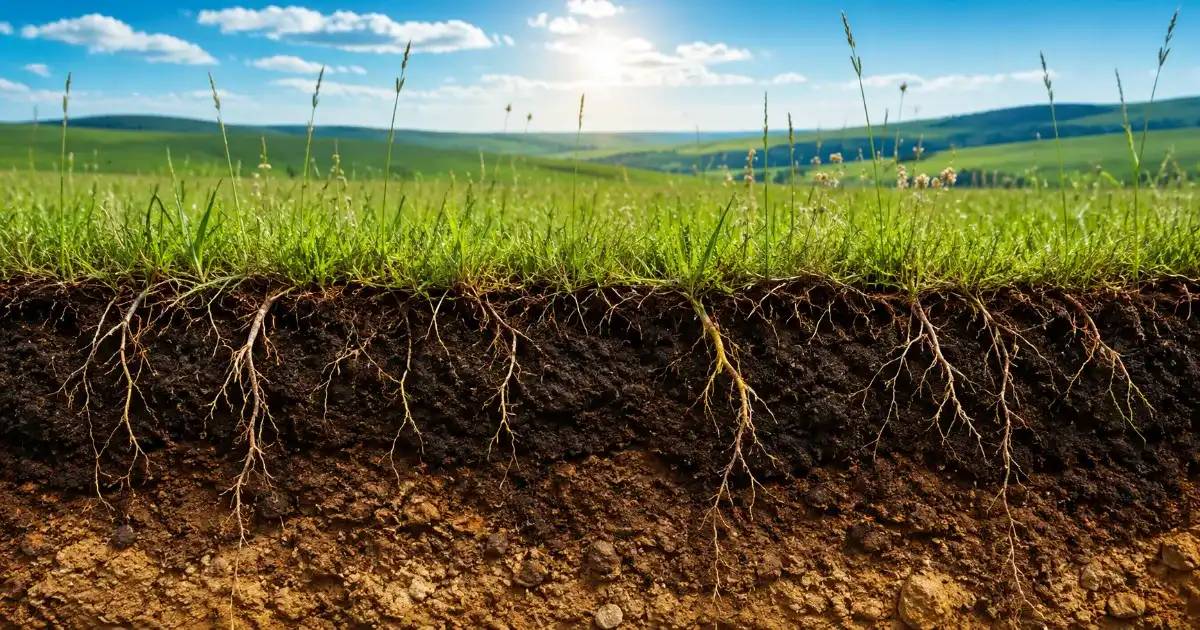
Grassland soil forms the foundation of grassland ecosystems because it supports plant growth, nutrient storage, and biological activity. This soil in grasslands usually contains high amounts of organic matter produced by deep grass roots and decomposed vegetation. As a result, many grasslands develop fertile grassland soil that supports dense plant cover and agricultural productivity.
Climate, rainfall, vegetation, and microbial activity strongly influence grassland biome soil characteristics. Humus-rich soil helps retain moisture, improve nutrient availability, and support healthy root development across grassland habitats. Different grasslands may contain different soil textures depending on regional environmental conditions.
Soil in grassland also plays an important role in biodiversity, carbon storage, and food production. Furthermore, healthy organic-rich soil supports sustainable farming and long-term ecosystem productivity in many regions worldwide.
What Is Grassland Soil?
Grassland soil is the layer of soil that forms beneath natural grass-dominated habitats over long periods of ecological development. This soil forms over long periods through the interaction of climate, vegetation, microorganisms, and organic matter accumulation. These soils usually contain high amounts of humus because grasses continuously add decomposed plant material to the surface layers.
Deep grass roots play an important role in soil development within grasslands. These roots grow deep underground, die naturally, and later decompose within the soil. As a result, organic matter gradually builds up and improves soil fertility, structure, and moisture retention.
Different grassland regions produce different soil conditions. Temperate grasslands often develop dark and nutrient-rich soils, while tropical grasslands may contain lighter soils with seasonal nutrient variation. Environmental conditions such as rainfall, temperature, and vegetation strongly influence soil formation within grassland ecosystems. These factors also shape the structure and functioning of grassland habitats.
This fertile soil support agriculture, plant growth, and long-term ecosystem productivity in many parts of the world.
How Grassland Soil Forms
This soil formation begins when grasses grow, shed roots, and decompose over time. Dead plant material mixes with minerals, microorganisms, and moisture within the upper soil layers. This process gradually creates organic-rich topsoil beneath grass-covered landscapes.
Deep root systems also improve soil structure and increase nutrient accumulation underground. Seasonal rainfall, climate conditions, and microbial activity further influence soil development in grasslands. Therefore, grassland soil often becomes fertile and highly productive over long periods.
Types of Grassland Soil
Grassland regions contain different soil types depending on climate, vegetation, rainfall, and geographical conditions. Some soils support highly productive agriculture because they contain rich organic matter and strong nutrient availability. Different grassland regions also develop distinct soil textures and fertility levels.
Temperate Grassland Soil
Temperate grasslands commonly develop mollisols, which are among the world’s most fertile soils. These soils contain thick, dark topsoil formed through continuous organic matter accumulation from deep grass roots. Prairie soils and chernozem grassland soil also belong to this category.
Mollisols usually contain high humus content and excellent moisture retention capacity. Therefore, temperate grassland soils support large-scale agriculture in many prairie and steppe regions worldwide.
Tropical Grassland Soil
Tropical grasslands, including savannas, often contain soils with seasonal nutrient variation. Heavy rainfall during wet seasons may wash nutrients deeper into the soil profile. As a result, some tropical grassland soils become less fertile than temperate grassland soils.
Savanna soils still support grass growth because grasses adapt well to seasonal drought and nutrient fluctuations. Soil fertility may also vary depending on rainfall patterns and organic matter availability.
Grassland Soil in India
Indian grasslands contain several important soil types across semi-arid and tropical regions. Black soils found in central India support grass growth because they retain moisture effectively during dry periods. Some alluvial grassland zones also develop fertile soil conditions near river plains.
Semi-arid grassland soils may contain lower organic matter because rainfall remains limited in many regions. However, natural grasses and seasonal vegetation still contribute to nutrient cycling and soil stability across Indian grasslands.
Characteristics of Grassland Soil
Soil in grasslands contains several important characteristics that influence fertility, plant growth, and ecosystem productivity. These soils usually develop beneath dense grass cover and receive continuous organic matter from roots and decomposed vegetation. As a result, many grassland soils become nutrient-rich and highly productive over time.
Climate, rainfall, vegetation, and underground root systems strongly influence grassland soil properties. Soil texture, moisture retention, humus content, and nutrient availability may vary across different grassland regions. However, fertile topsoil and strong root influence remain common features in many grassland habitats.
High Organic Matter Content
Grassland soils usually contain high amounts of organic matter because grasses continuously shed roots and plant material underground. Dead vegetation decomposes slowly and mixes with soil particles over time. This process increases humus content and improves soil fertility naturally.
Organic-rich soil also supports microbial activity and nutrient recycling within grassland regions. Furthermore, high organic matter improves soil structure and long-term agricultural productivity.
Dark and Fertile Topsoil
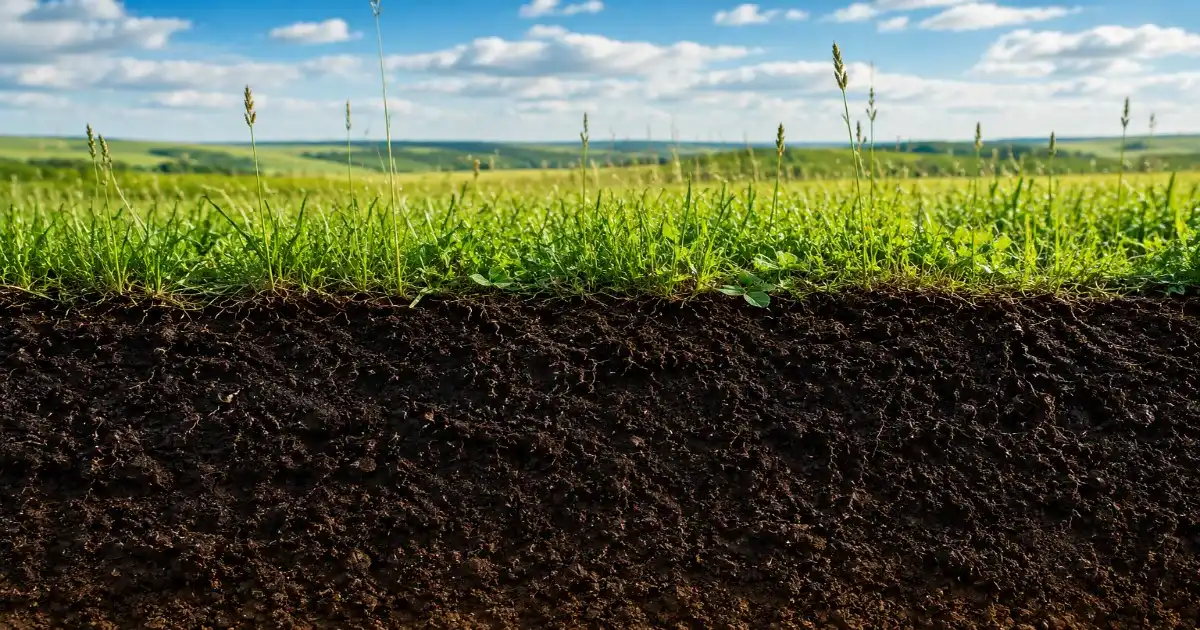
Many grassland soils develop dark-colored topsoil because they contain large amounts of decomposed organic material. Humus-rich soil stores nutrients efficiently and supports healthy plant growth across grassland habitats.
Dark topsoil often indicates strong fertility and high biological activity within the soil. Therefore, many prairie soils and mollisol grassland soils support productive farming and natural vegetation growth.
Moisture Retention and Texture
Grassland soil often retains moisture effectively because organic matter improves water-holding capacity. Soil texture may range from loamy to clay-rich depending on local environmental conditions and vegetation patterns.
Moisture retention helps grasses survive seasonal drought and changing rainfall conditions. Similar interactions between soil, climate, and environmental conditions can also be understood through biotic and abiotic factors.
Deep Root Influence on Soil Structure
Deep grass roots strongly influence soil structure within grassland regions. Roots create underground channels that improve aeration, water movement, and root penetration through the soil profile.
As roots die and decompose, they add organic matter deeper into the soil layers. This root-based soil formation process helps maintain stable soil structure and improves long-term fertility.
Nutrient Availability in Grassland Soil
Grassland soils usually contain important nutrients such as nitrogen, phosphorus, potassium, and calcium. Organic matter decomposition continuously releases these nutrients back into the soil environment.
Microorganisms also help recycle nutrients and maintain soil productivity within grasslands. Therefore, nutrient-rich soil supports healthy vegetation growth, biodiversity, and agricultural productivity across many grassland regions.
Why Is Grassland Soil Fertile?
Grassland soil ranks among the most fertile soils on Earth. Thick grass cover, deep roots, and steady organic matter buildup improve soil quality over time. Unlike many forest soils, grassland soils store nutrients mainly within the topsoil layer.
Natural decomposition also plays a major role in grassland soil fertility. Dead roots, leaves, and plant remains break down slowly and release nutrients back into the soil. Therefore, grassland regions often support productive farming and healthy vegetation growth.
Seasonal grass growth further enriches the soil each year. Rainfall, root activity, and microbial processes work together to maintain nutrient-rich conditions underground. These natural cycles help grassland ecosystems remain productive for long periods.
Role of Decomposing Grass Roots
Deep grass roots constantly grow, die, and decompose beneath the soil surface. This process adds organic matter directly into underground soil layers. As roots break down, they release nutrients that improve grassland soil fertility naturally.
Microorganisms and decomposers also help recycle nutrients within the ecosystem. Similar nutrient recycling processes occur within producers, consumers, and decomposers in grasslands. Therefore, decomposing roots support healthy soil structure and long-term productivity.
Humus Formation and Nutrient Cycling
Humus forms when dead plant material decomposes and mixes with soil particles. This dark organic layer stores nutrients and improves moisture retention within grassland soils. Furthermore, humus supports microbial activity and healthy plant growth.
Nutrient cycling continuously transfers minerals between plants, soil organisms, and the environment. Energy and nutrient movement within ecosystems also connect closely with trophic interactions in grasslands. As a result, fertile grassland regions maintain strong ecosystem productivity.
Seasonal Growth and Soil Enrichment
Seasonal rainfall and grass growth add fresh organic material to the soil every year. During growing seasons, grasses absorb nutrients and later return them through decomposition. This natural cycle enriches the soil continuously.
Dry seasons also influence nutrient concentration within the upper soil layers. Therefore, seasonal grassland conditions help maintain balanced soil fertility over time.
Relationship Between Grassland Soil and Climate
Climate strongly affects grassland soil quality and fertility. Rainfall, temperature, and seasonal dryness influence organic matter buildup, nutrient availability, and soil moisture levels. Different grassland regions develop different soil conditions because climate patterns vary widely.
Over time, climate conditions also influence soil depth, texture, and overall productivity across grassland landscapes. As a result, grassland soils may vary significantly between regions with different rainfall and temperature patterns.
Moderate rainfall usually supports healthy grass growth and steady organic matter accumulation. However, excessive rainfall may wash nutrients deeper into the soil profile. Temperature also affects decomposition speed and microbial activity within grassland soils.
Seasonal climate changes shape soil texture, fertility, and moisture retention throughout the year. Therefore, grassland climate and soil remain closely connected in natural ecosystems.
Effect of Rainfall on Grassland Soil
Rainfall directly affects soil moisture and nutrient movement within grasslands. Moderate rainfall supports grass growth and improves organic matter accumulation in the topsoil layer. As grasses grow, they contribute more plant material to the soil.
Heavy rainfall, however, may remove nutrients through leaching. Low rainfall can also reduce microbial activity and slow decomposition in soil. Therefore, balanced rainfall helps maintain soil fertility in grassland regions.
Temperature and Seasonal Dryness
Temperature influences decomposition rates and nutrient release within grassland soils. Warm conditions usually increase microbial activity and speed up organic matter breakdown. This process improves nutrient availability for grasses and other plants.
Seasonal dryness may reduce soil moisture and slow biological activity underground. However, many grassland soils still retain nutrients because deep roots stabilize the soil structure effectively.
Importance of Grassland Soil
Grassland soil supports agriculture, biodiversity, climate balance, and ecosystem productivity across many regions of the world. Its rich organic matter and nutrient content make it valuable for both natural ecosystems and human activities.
Healthy grassland soils also improve water retention and reduce land degradation. Furthermore, these soils store carbon underground and support grazing animals in open landscapes. Their environmental importance continues to grow as soil conservation becomes more necessary worldwide.
Importance for Agriculture
Many grassland soils support productive farming because they contain fertile topsoil and high organic matter levels. Crops grow well in these soils due to strong nutrient availability and good moisture retention.
Prairie soils and mollisols especially support large-scale agriculture in several countries. Therefore, agricultural soil fertility in grassland regions contributes greatly to global food production.
Role in Carbon Storage
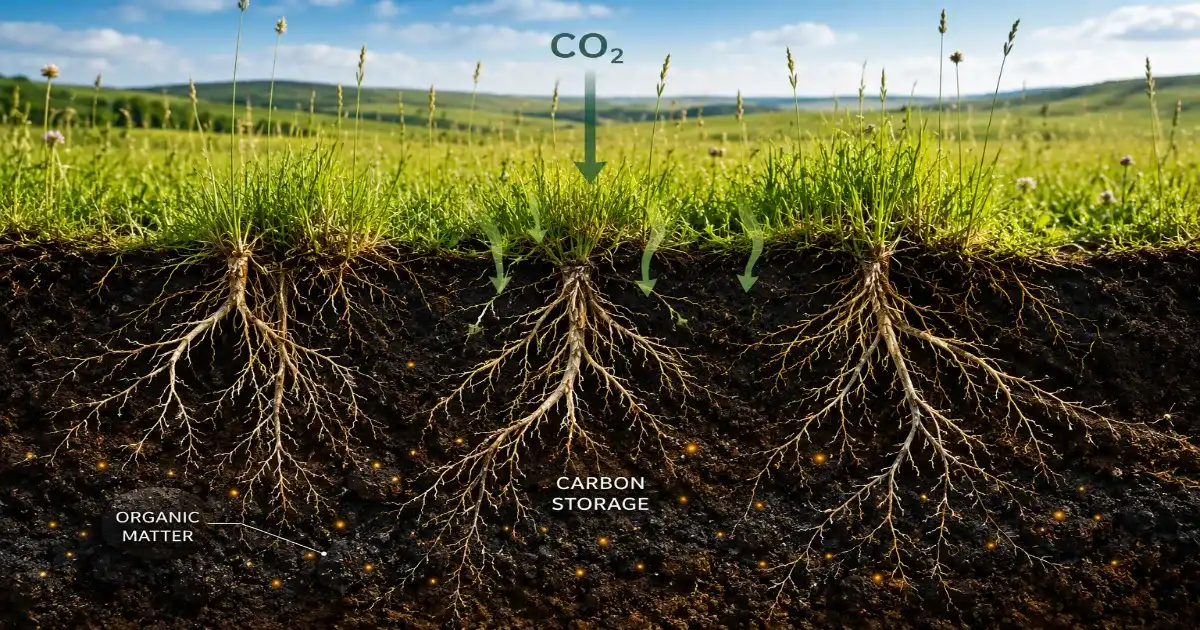
Grassland soils store large amounts of carbon beneath the surface through deep root systems and organic matter accumulation. This process, called carbon sequestration, helps reduce excess carbon dioxide in the atmosphere.
Underground carbon storage also improves soil structure and long-term fertility. Therefore, protecting grasslands helps maintain carbon storage in grassland ecosystems and contributes to climate stability and environmental health
Support for Biodiversity and Grazing
Grassland soils support diverse plant species, insects, grazing animals, and soil organisms. Nutrient-rich soil helps grasses grow densely and provides food for herbivores across open landscapes.
Healthy grazing land soil also supports livestock farming in many regions. Besides that, strong ecosystem productivity depends heavily on fertile and stable grassland soils.
Prevention of Soil Erosion
Dense grass cover and deep roots help hold soil firmly in place. This natural protection reduces wind and water erosion across grassland regions.
Soil conservation also protects ecosystem health and land productivity. Deep root systems improve soil stability and help grassland soils resist environmental stress during heavy rainfall and strong winds.
Threats to Grassland Soil
Grassland soils face several environmental threats that reduce fertility, damage soil structure, and affect long-term ecosystem productivity. Natural grass cover protects soil under stable conditions. However, excessive human pressure and poor land management can disturb this balance over time.
Loss of organic matter, soil erosion, and nutrient depletion often reduce soil quality across grassland regions. Climate change, unsustainable farming, and habitat conversion may also increase land degradation in many grassland environments. Therefore, protecting grassland soil remains important for biodiversity, agriculture, and ecological stability.
Overgrazing and Soil Degradation
Overgrazing occurs when animals feed on grasses faster than vegetation can recover naturally. Excessive grazing reduces plant cover and exposes the soil surface to environmental stress. As a result, grassland soil gradually loses nutrients, moisture, and organic matter.
Heavy grazing also weakens root systems that normally help stabilize the soil. Compacted soil reduces water absorption and limits healthy plant growth within grassland habitats. Therefore, long-term overgrazing can increase grassland soil degradation and reduce ecosystem productivity.
Soil Erosion and Desertification
Soil erosion removes fertile topsoil through wind and water movement. Grassland regions become more vulnerable to erosion when vegetation cover decreases because exposed soil remains unprotected. Strong winds may carry away dry topsoil, while rainfall can wash nutrients from the surface layers.
Continuous erosion may eventually contribute to desertification in dry and semi-arid grasslands. Land degradation often increases when natural vegetation disappears due to unsustainable farming or habitat conversion. Broader environmental damage caused by habitat loss can also be understood through deforestation and land degradation.
Human Activities Affecting Grassland Soil
Several human activities negatively affect grassland soil quality and fertility. Excessive farming, mining, urban expansion, and chemical overuse may disturb natural soil structure and nutrient balance.
Unsustainable land use often reduces organic matter and increases soil degradation over time. Furthermore, habitat disturbance may reduce vegetation cover and weaken natural soil protection across grassland regions.
Conclusion
Grassland soil supports plant growth, nutrient cycling, biodiversity, and long-term ecosystem productivity across many regions of the world. Deep grass roots and organic matter help create fertile grassland soil with strong moisture retention and nutrient availability.
Different grassland regions develop different soil types depending on climate, rainfall, and vegetation patterns. However, many grassland soils remain highly productive because they contain rich topsoil and continuous organic matter accumulation.
Overgrazing, erosion, and unsustainable land use can gradually damage nutrient-rich grasslands and reduce soil fertility. Therefore, soil conservation remains important for maintaining healthy ecosystems, agricultural productivity, and environmental stability over time.