
Temperate Grassland: Climate, Characteristics, Vegetation, and Examples
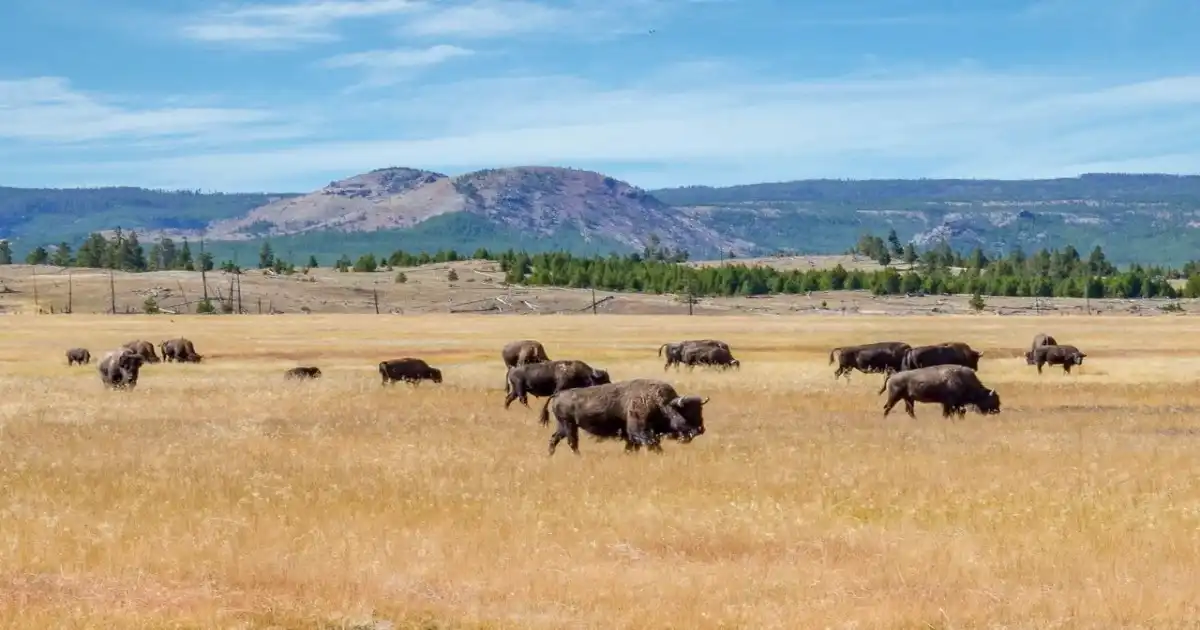
Temperate grasslands occur mainly across the mid-latitudes, where seasonal changes shape the landscape. They are known for broad open areas dominated by grasses and other low-growing plants.
Their climate varies by region, but most experience warm summers and cold winters. Rainfall is often seasonal or limited, which helps explain the scarcity of trees across many areas.
These grasslands support diverse plants and animals, from grazing mammals to birds and insects. They also contain valuable soils and provide important habitats for wildlife.
Major regions include the prairies of North America, pampas of South America, and steppes of Eurasia. This article examines their climate, characteristics, vegetation, wildlife, distribution, major examples, ecological importance, and conservation challenges.
What Is a Temperate Grassland?
Temperate grasslands are open landscapes shaped by seasonal temperatures, rainfall, fire, and grazing. Grasses dominate these areas, while trees remain scattered or uncommon. Their climate and vegetation vary across several continents.
Defining a Temperate Grassland
A temperate grassland is an open region where grasses form the main plant cover. These areas occur mainly in the mid-latitudes, between tropical and polar regions. Their climate has clear seasonal changes, with warm summers and cold winters.
Trees are generally scarce, while grasses and other low-growing plants dominate the landscape. These grassland ecosystems with local rainfall, temperature, and soil conditions. Therefore, temperate grasslands can range from tall, dense prairies to shorter, drier steppe landscapes.
Why Temperate Grasslands Have Few Trees
Limited moisture can restrict tree growth, especially in drier regions. Seasonal drought can place further stress on young trees and seedlings. Fire also favors grasses because many grass species can recover quickly after burning.
Grazing adds another pressure on woody plants. Together, rainfall patterns, drought, fire, grazing, and temperature help maintain open grassland landscapes instead of dense forests.
Where Are Temperate Grasslands Found?
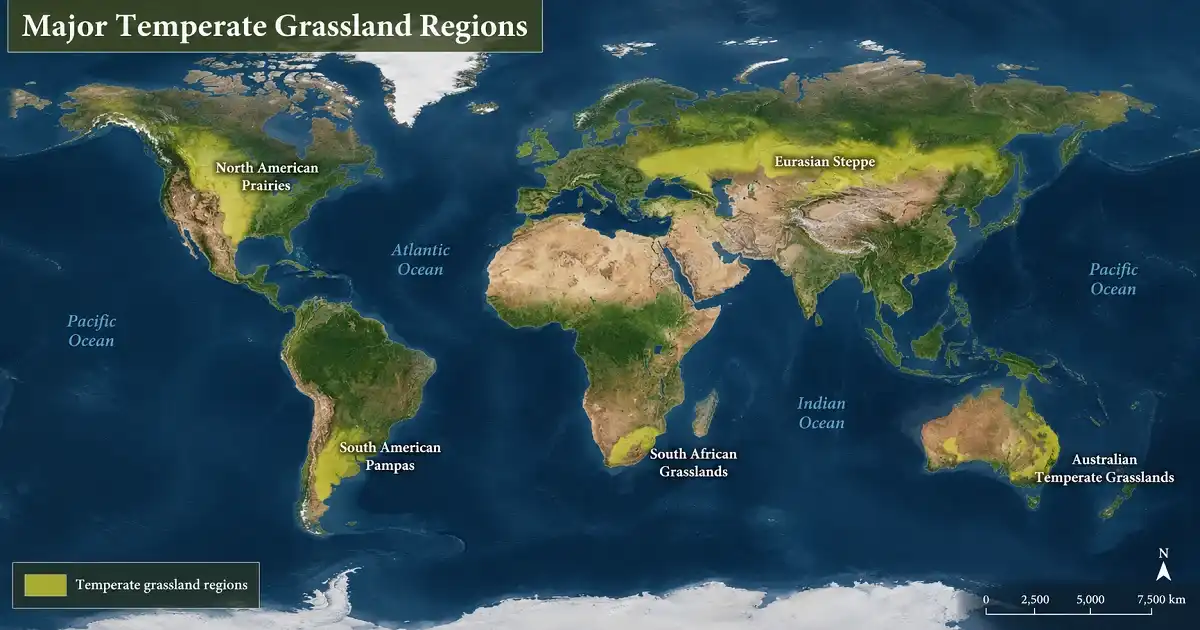
Temperate grasslands occur mainly across the mid latitudes of North America, South America, Eurasia, and southern Africa. They have different regional names, including prairie, Pampas, steppe, and veld. Their distribution reflects climate, geography, and moisture availability
Major Temperate Grassland Regions
Temperate grasslands occur across several continents, but their names often change with location. In North America, major temperate grassland regions are commonly called prairies. The Great Plains contain tallgrass, mixed-grass, and shortgrass prairie regions, with grass height often linked to rainfall.
In South America, the Pampas cover broad areas of Argentina, Uruguay, and southern Brazil. These grasslands have a generally temperate climate and contain rich agricultural soils.
Farther east, the Eurasian Steppe stretches across a vast belt from Europe into Asia. It includes grasslands in countries such as Ukraine, Russia, Kazakhstan, Mongolia, and China. The steppe becomes generally drier toward some eastern and interior areas.
Southern Africa also has temperate grassland regions known as veld. Local climate, elevation, and rainfall create differences between these grasslands. Therefore, the term temperate grassland describes a broad ecological group rather than one identical landscape.
Temperate Grassland Latitude
Temperate grasslands are mainly found at mid-latitudes, away from the equator and polar regions. However, there is no single latitude range that applies to every temperate grassland.
Their distribution depends on more than latitude alone. Temperature, rainfall, continental position, elevation, and local geography also influence where these grasslands occur.
What Is the Climate of Temperate Grasslands?
The temperate grassland climate has clear seasonal changes in temperature and moisture. Summers can become warm or hot, while winters may bring freezing conditions
Rainfall also varies across regions and seasons. These differences affect grass height, plant growth, and the length of the growing season. Therefore, temperate grasslands do not have one identical climate worldwide.
Seasonal Temperatures
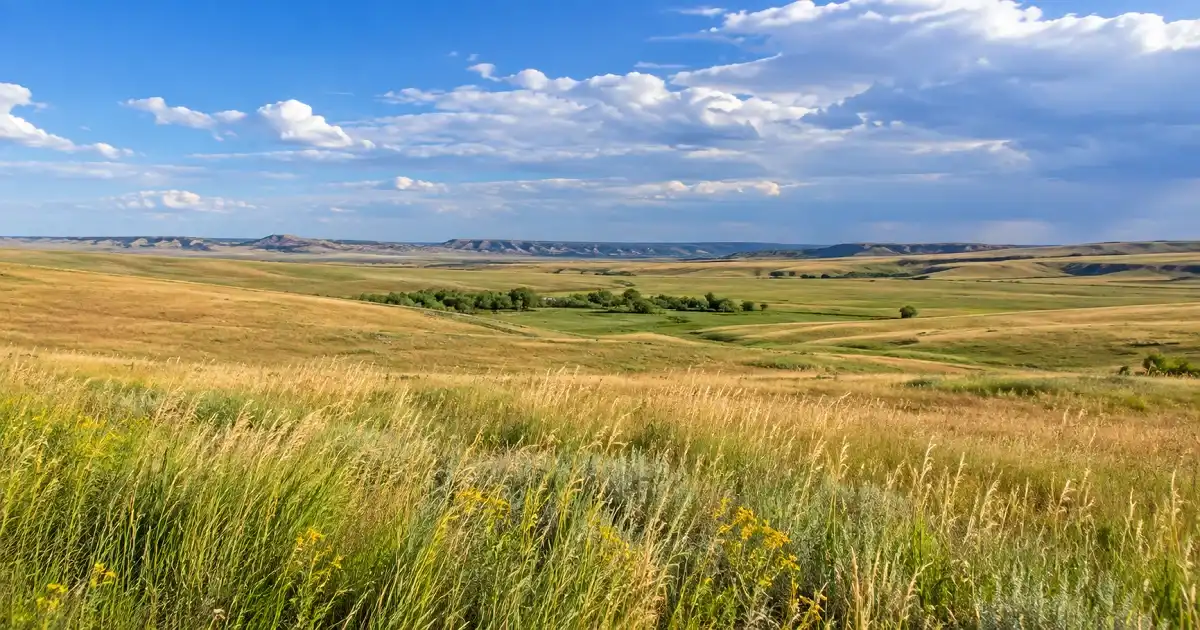
Temperate grasslands experience noticeable changes between summer and winter. Summers may become warm or hot, while winters can be cold and sometimes severe. Continental locations often have greater temperature swings because they lie far from the moderating influence of oceans.
Rainfall and Moisture
Rainfall is moderate in many temperate grasslands, but it varies greatly by region. Wetter areas can support taller and denser grasses, while drier regions favor shorter vegetation.
For example, North American prairies range from tallgrass areas in wetter regions to shorter grasslands in drier areas. Therefore, moisture availability strongly influences local vegetation.
Drought and Seasonal Variation
Periodic drought can reduce plant growth and limit available water during the growing season. Grassland plants cope with these changes through adaptations to seasonal moisture shortages. Drier conditions also make dense tree growth more difficult.
However, rainfall patterns differ across regions, so the effects of drought are not the same everywhere.
What Are the Main Characteristics of Temperate Grasslands?
Temperate grasslands have several features that distinguish them from forests and tropical savannas. Their landscapes are generally open, grasses dominate the plant cover, and trees are limited. Seasonal weather, fire, grazing, and regional rainfall also shape how these landscapes look and function.
Open, Grass-Dominated Landscapes
Grasses form the main vegetation across most temperate grasslands. Trees and large shrubs are generally sparse, creating wide, open landscapes. Other herbaceous plants, including wildflowers and forbs, can grow among the grasses. The amount and height of vegetation depend strongly on local moisture.
Fire, Grazing, and Seasonal Growth
Fire and grazing help maintain the open character of many grasslands. Many grasses can regrow from protected parts near or below the soil surface after fire or grazing. Seasonal growth also changes the appearance of these landscapes throughout the year.
Regional Variation
Temperate grasslands are not all alike. Wetter regions can support tallgrass systems, while drier areas often have shorter grasses. Mixed-grass systems occur between these extremes. Rainfall, temperature, soil conditions, and local geography therefore create noticeable regional differences.
What Plants Grow in Temperate Grasslands?
Temperate grassland vegetation is dominated by grasses, but many other herbaceous plants also grow there. Plant height and variety change with rainfall, temperature, and local conditions. Wetter areas support taller vegetation, while drier regions often have shorter grasses.
Grasses as the Dominant Vegetation
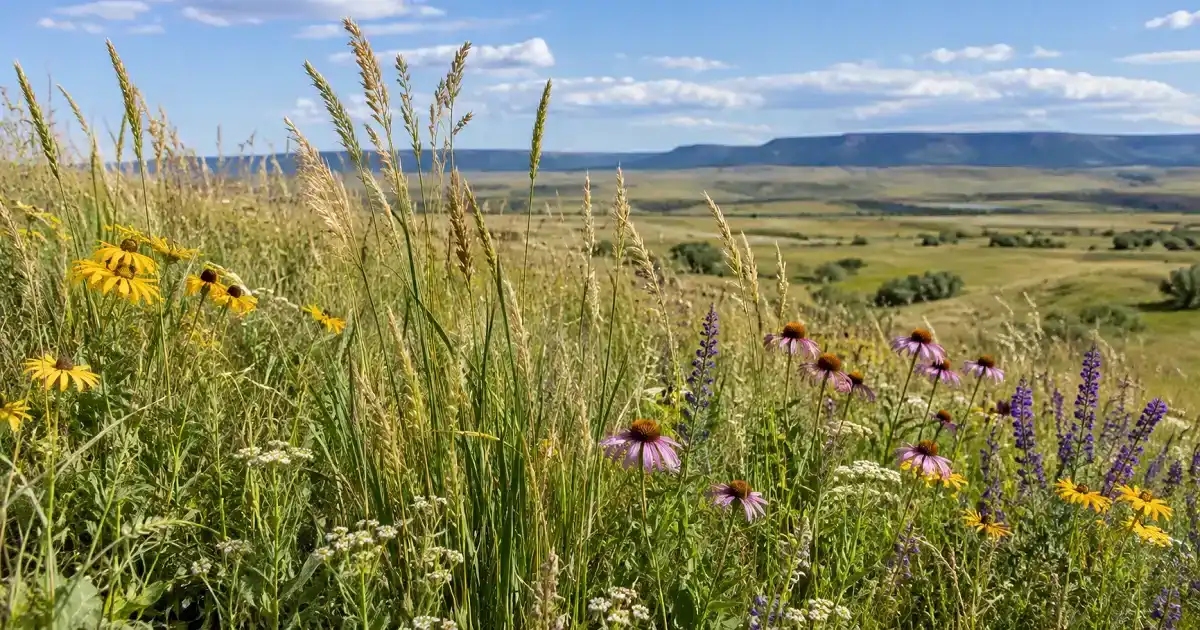
Grasses form the main plant cover across most temperate grasslands. Their height varies with local moisture, creating tallgrass, mixed-grass, and shortgrass areas. Wetter regions can support taller native grasses, while drier areas favor shorter species. This pattern gives different grasslands their distinct appearance.
Wildflowers and Other Herbaceous Plants
Wildflowers grow among grasses and can add seasonal color to open grasslands. Forbs, legumes, and other herbaceous plants also contribute to plant diversity. Many produce flowers during favorable growing periods. Their seeds and foliage provide important resources for grassland wildlife.
How Plants Adapt to Grassland Conditions
Many grassland plants develop extensive root systems that help them access water and nutrients. Growth points near or below the ground also protect grasses from grazing and fire. Some plants tolerate dry periods by reducing growth or conserving water. After grazing or fire, their protected roots can support new growth.
What Animals Live in Temperate Grasslands?
Temperate grassland animals have adapted to open landscapes with seasonal weather and abundant plant life. Grazing mammals are especially important, but these habitats also support predators, birds, rodents, insects, and other wildlife. Species differ greatly between regions, so no single animal community represents every temperate grassland.
Herbivores and Grazers
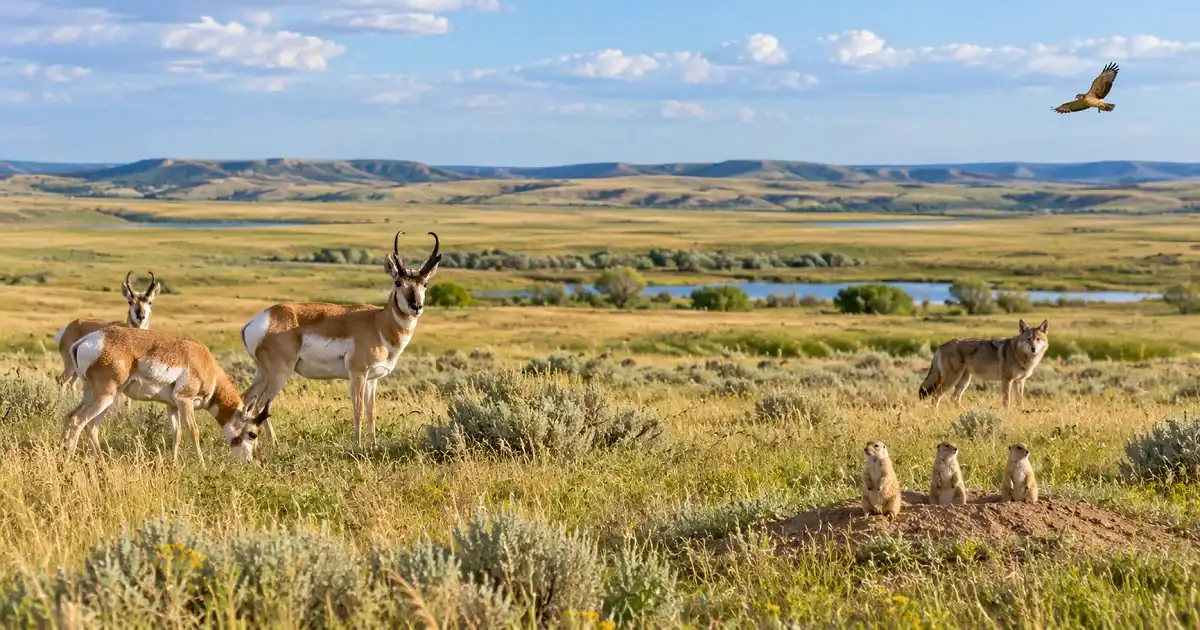
Large grazers include bison, pronghorn, wild horses, saiga, and guanacos in different regions. Smaller herbivores also feed on grasses, seeds, and other plants. Their grazing can influence vegetation, while their movements connect different parts of the grassland habitat.
Predators, Birds, and Smaller Animals
Temperate grasslands support predators such as wolves, coyotes, foxes, and other region-specific carnivores. Birds of prey hunt across open areas, while grassland birds use grasses for food, shelter, and nesting.
Rodents and other burrowing animals are also common in many regions. Insects, including grasshoppers, beetles, and pollinators, add further diversity. Therefore, grassland wildlife ranges from large grazing mammals to small organisms living in different parts of the habitat.
What Is the Difference Between Temperate Grasslands and Savannas?
Temperate grasslands and savannas are both grass dominated landscapes. However, their climates and vegetation patterns differ.
Temperate Grasslands vs. Savannas
| Features | Temperate Grassland | Savannas |
| Main climate zone | Temperate | Tropical or sub-tropical |
| Temperature | Strong seasonal variation | Generally warn year- round |
| Winter | Often cold | Usually mild or warm |
| Trees | Usually sparse | Scattered trees are characteristics |
| Seasonal pattern | Temperature and moisture vary | Wet and dry seasons are often pronounced |
| Examples | Prairie, pampas, steppe | Africa and tropical savannas |
Temperate grasslands experience greater seasonal temperature changes. Winters can become cold, while summers may become warm or hot.
Savannas occur mainly in tropical and subtropical climates. They often have a clear wet season and dry season, with scattered trees across the grassland.
Therefore, the key difference is climate. Temperate grasslands are shaped by strong seasonal temperatures, while savannas are shaped more by tropical warmth and seasonal rainfall.
This distinction also helps separate temperate grasslands from tropical grasslands.
What Is the Largest Temperate Grassland?
The Eurasian Steppe is generally recognized as the world’s largest temperate grassland system. It forms a vast belt across Europe and Asia.
Eurasian Steppe
The Eurasian Steppe stretches across a vast east to west area. It includes grasslands from eastern Europe through Russia, Kazakhstan, Mongolia, and parts of China.
Conditions change across this enormous region. Some areas support taller grasses, while drier sections have shorter vegetation and fewer plants.
The Eurasian Steppe is therefore best understood as a large connected grassland system rather than one uniform landscape.
It is also useful to separate size from natural condition. The largest temperate grassland system is not necessarily the largest intact grassland area.
Why Are Temperate Grasslands Important?
Temperate grasslands provide habitat, support food production, and store carbon in their soils. Their open landscapes also support ecological processes that vary with climate and region.
Biodiversity and Wildlife Habitat
Temperate grasslands support many plants, mammals, birds, reptiles, and insects. Native vegetation provides food, shelter, and nesting sites for wildlife.
Large grazers also shape plant growth and create habitat for smaller species. Therefore, healthy grasslands can support diverse communities across wide open areas.
Soil, Water, and Carbon
Temperate grasslands can contain deep, carbon rich soils formed under long periods of grass growth. Their extensive roots help hold soil and support nutrient cycling.
Grassland vegetation can also slow runoff and help water enter the soil. These functions make natural grasslands valuable for water regulation and carbon storage.
Areas with fertile grassland soils can also support productive agriculture. However, converting natural grasslands can reduce some of their ecological functions.
Human Uses
People have used temperate grasslands for grazing and food production for centuries. Their open terrain supports livestock farming across many regions.
Many grasslands also became major agricultural areas where soils and rainfall support crops. Therefore, these landscapes contribute to rural livelihoods and retain cultural and historical importance.
What Threatens Temperate Grasslands?
Temperate grasslands face growing pressure from land conversion and changes in how landscapes are managed. Agriculture can replace native vegetation, while roads and development can divide remaining habitat and accelerate grassland degradation.
Habitat fragmentation makes it harder for wildlife to move between suitable areas. Overgrazing can also reduce plant cover and increase pressure on native vegetation.
Invasive species may compete with native plants and change grassland structure. Furthermore, altered fire patterns can disrupt ecological processes that help maintain open landscapes.
Climate change adds another challenge by changing temperature, rainfall, drought patterns, and growing conditions. These pressures can interact, making grassland degradation more difficult to reverse.
How Can Temperate Grasslands Be Conserved?
Grassland conservation works best when protection and active management are used together. Protected areas can safeguard remaining natural grasslands and important wildlife habitat.
Sustainable grazing can reduce pressure on vegetation and allow plants to recover. Native vegetation restoration can also reconnect fragmented areas and improve habitat quality.
Appropriate fire management can maintain natural grassland processes where fire is part of the ecosystem. Preventing unnecessary conversion is equally important because intact grasslands are difficult to recreate once heavily altered.
Frequently Asked Questions About Temperate Grasslands
Temperate grasslands differ across regions, but they share common climate, vegetation, and wildlife patterns. The following questions cover the most important facts.
Which are the temperate grasslands?
Major temperate grasslands include the prairies of North America, Pampas of South America, Eurasian Steppe, and veld regions of southern Africa.
What is another name for temperate grasslands?
Temperate grasslands have different regional names. Common examples include prairies, Pampas, steppes, and veld, depending on their location and local geography.
What are the four types of grasslands?
There is no single global four type classification. Common regional grassland forms include prairies, steppes, Pampas, and veld.
What is the difference between a temperate grassland and a savanna?
Temperate grasslands have stronger seasonal temperature changes and colder winters. Savannas occur in warmer climates and commonly have distinct wet and dry seasons.
What is the largest temperate grassland?
The Eurasian Steppe is generally recognized as the world’s largest temperate grassland system. It stretches across a vast belt between Europe and Asia.
What plants grow in temperate grasslands?
Grasses dominate temperate grassland vegetation. Wildflowers, forbs, legumes, and other herbaceous plants also grow among grasses, with plant diversity changing across regions.
What animals live in temperate grasslands?
Temperate grasslands support grazers such as bison, pronghorn, wild horses, saiga, and guanacos. Predators, birds, rodents, insects, and other wildlife also occur.
What latitude are temperate grasslands found in?
Temperate grasslands mainly occur across the mid latitudes, generally away from tropical and polar regions. Their exact range varies with climate, elevation, and geography.
Conclusion
Temperate grasslands are open ecosystems shaped by seasonal temperatures, rainfall, fire, and grazing. Their vegetation and wildlife change across different regions.
Prairies, Pampas, steppes, and veld are among the best-known regional forms. Each has its own climate, plant communities, and wildlife.
These landscapes also provide valuable habitat and support agriculture, grazing, carbon storage, and water regulation. However, land conversion and other pressures continue to reduce natural grasslands.
Protecting remaining areas is therefore important for biodiversity and ecosystem health. Sustainable land use and native vegetation restoration can help conserve these distinctive ecosystems.